Give IB classroom practice more specific feedback
GradingPal helps teachers assess supported practice and permitted draft work against their department criteria. Review the evidence behind suggested scores, refine the comments, and give students a clear next step that fits the task and the feedback their component permits.
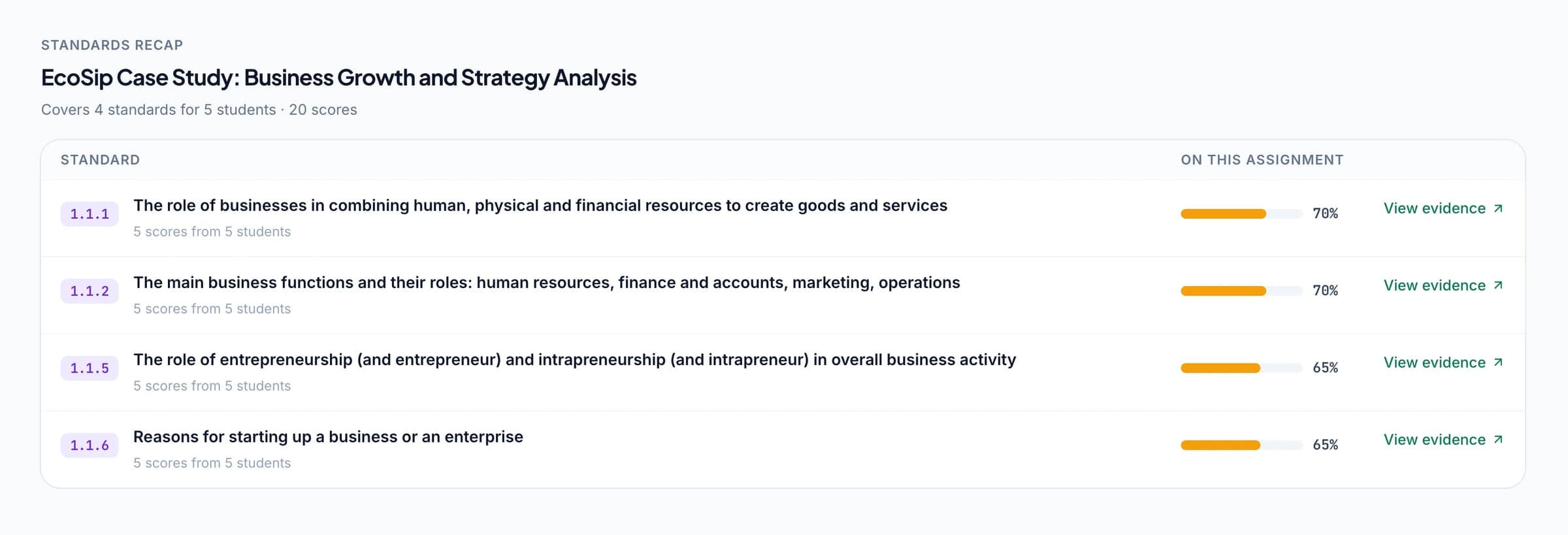
Put the criterion beside the student's evidence
Substantial student work requires careful reading against distinct expectations. GradingPal generates an assessment using the rubric you provide, with explanations that let you inspect how the submitted response supports a suggested level or score.
Review the evidence and make the judgment appropriate to the work. The aim is to reduce repeated scoring and comment-writing while keeping the final assessment and feedback decisions with the responsible teacher.
Assess practice across writing, science, and other supported work
Use the workflow that fits the evidence students submit. Department criteria should reflect the purpose and stage of the task rather than applying one generic rubric to all coursework.
Extended writing and reasoned arguments
Assess the development of an explanation, use of evidence, and organization in appropriate classroom practice. Essay grading supports the submitted response against your criteria.
Scientific investigations and analysis
Assess submitted data interpretation, reasoning, and evaluation. Review scientific correctness and the context of the investigation. Science grading provides the relevant assessment workflow.
Mathematical reasoning and explorations
Assess supported calculations and explanations, including readable handwritten working. Make the assessed evidence explicit in the rubric and inspect the proposed credit for the method.
Language and written-response practice
Use the relevant criteria and supported feedback-language settings. Review terminology, the student's original wording, and the next step you intend to return.
Use draft feedback appropriate to the component
For work connected to internal assessments, an extended essay, a theory of knowledge essay, or another assessed component, first establish the feedback the specific task permits. Use GradingPal's review tools within that process rather than assuming every draft can receive the same assistance.
Teachers decide which comments are appropriate to return. The tool can propose guidance, but the course's requirements determine the permissible feedback and the responsible educator makes the assessment decision.
Make the next permitted step clear
Consider an illustrative practice response that states a conclusion but gives limited evaluation of the evidence. GradingPal proposes feedback under the relevant criterion, and the teacher reviews how to express the next step appropriately.
The resulting comment can direct attention to the missing evaluation without replacing the student's thinking. Choose the style and instructions that fit the task, and inspect the individual wording before sharing it.
Review rubric wording and comments with the assistant
Use Ask GradingPal to propose supported rubric or feedback changes in the current editing context. Ask for a clearer criterion description or a more focused comment, then review the proposed revision.
Keep the content consistent with the assessment purpose and permitted guidance. A faster edit is useful when it preserves the intended criterion and helps the teacher communicate the appropriate feedback.
Support a more specific department discussion
On plans with shared libraries, colleagues can reuse assessment resources and inspect examples against common criteria. Compare the proposed score with the work behind it, especially where a response falls near a level boundary.
Shared wording helps the discussion focus on evidence. Teachers remain responsible for their judgments, institutional procedures, and any required official assessment or moderation process. Explore shared rubric resources.
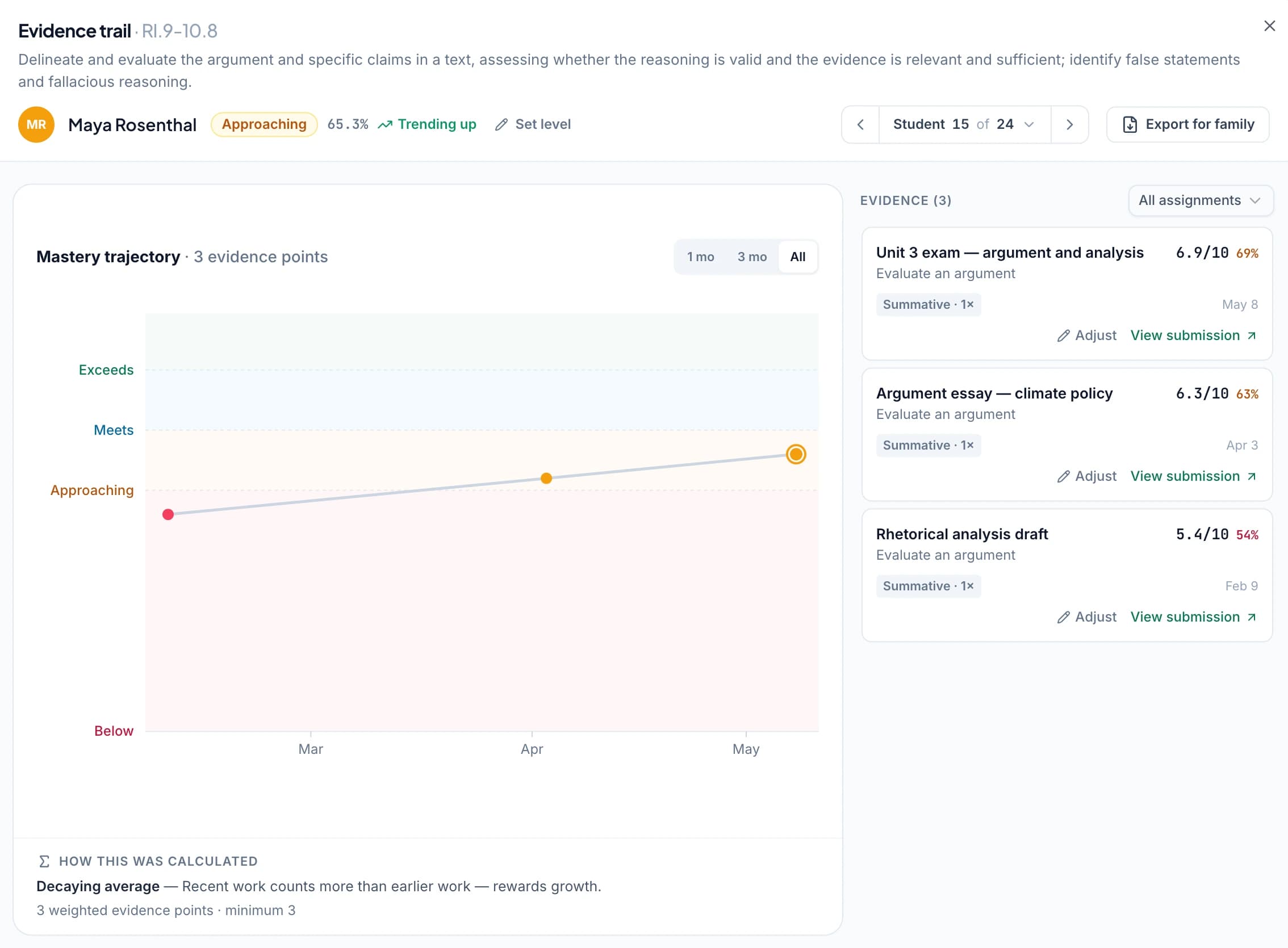
Follow relevant learning evidence across practice tasks
Where the available course resources and your approach support alignment, review the selected tags and use approved results in the optional standards mastery gradebook. Open the original work to inspect development across assignments.
Paid classroom analytics can also identify patterns in approved responses and suggest teaching activities to review. Use these views for classroom planning; they do not determine official subject grades or diploma outcomes.
Questions about IB-related coursework support
Does GradingPal supply official IB criteria as ready-made rubrics?
This workflow uses the teacher or department rubric you provide. It does not promise a built-in library of official IB assessment criteria.
Does GradingPal award internal assessment marks?
No. The responsible teacher awards those marks through the required process. GradingPal supports appropriate practice and permitted draft review.
Can it predict an IB subject grade or diploma total?
No. A practice assessment is not an official grade prediction. Use it to inspect the work and choose the next teaching or feedback action.
Can I use it for every draft in the same way?
Follow the requirements of the specific component and stage. Review what guidance is permitted before deciding which suggestions to return.
Can colleagues use shared assessment criteria?
Yes, through your department resources and shared-library access where included in the plan. Review the criteria and individual judgments in the context of the actual task.
Is GradingPal endorsed by the IB?
GradingPal is not affiliated with or endorsed by the International Baccalaureate Organization. This page describes classroom use by teachers in the relevant course context.
Make careful feedback more manageable
Bring the task, department criteria, and relevant guidance requirements, then inspect the assessment and feedback on real work.