AI grading for TEKS-aligned classroom work
GradingPal helps Texas teachers assess writing, math, science, and other supported work against their rubrics. Connect relevant criteria to TEKS, generate individualized feedback, and use approved assessment evidence to plan reteaching and follow progress across assignments.
Return detailed feedback on the practice students complete
Constructed responses and worked problems reveal more than whether the final answer is correct. GradingPal assesses the submitted work against your criteria and explains the suggested score, giving you evidence to inspect before returning the assessment.
Use the time saved on repeated scoring and comments to focus on the student's next action. A response may need stronger evidence, a clearer explanation, or a correction to the method, and the feedback should name that difference.
Support TEKS work across subjects
Choose the assessment type and rubric that reflect the task your class completed. GradingPal generates scores and comments for supported work rather than treating every response as an essay.
Reading and writing responses
Assess evidence use, explanation, organization, and other criteria in classroom RLA tasks and STAAR-related practice. Give students feedback tied to the passage they wrote. Essay grading.
Math problem sets
Assess answers and shown working, including readable handwriting. Define method credit and reasoning expectations in the rubric. Math grading.
Science investigations and explanations
Review submitted data analysis, reasoning, and conclusions against your science criteria. Include relevant practice for the course and selected TEKS set. Science grading.
Social studies and practice tests
Assess source-based explanations, short answers, and other supported question responses using teacher or department criteria. Exam and test grading.
Review the TEKS alignment for each assessed skill
Choose the appropriate TEKS set for the course and grade. Inspect suggested standards on rubric criteria or questions and accept the tags that match what students were asked to demonstrate.
Use available classifications, such as Readiness or Supporting designations, where the selected set provides them. Keep the actual response and criterion central: the tag organizes evidence, while your rubric defines the assessment.
Make a constructed-response comment actionable
Consider an illustrative reading response that includes a relevant detail but does not explain its relationship to the author's claim. GradingPal proposes a score under your explanation criterion and a comment addressing the missing link.
Review the evidence, refine the wording, and ask the student to add a sentence explaining why that detail supports the interpretation. The resulting feedback gives the student a visible change to make in the response. Explore teacher feedback controls.
Identify what the class needs before the next practice
Paid classroom analytics helps you inspect question results and recurring response patterns across approved work. Review the associated students and supporting responses before planning a whole-class explanation or a smaller practice group.
For math, distinguish a repeated calculation error from a difficulty explaining the method. For RLA, distinguish finding evidence from explaining it. Those examples illustrate how the same class total can hide different instructional needs.
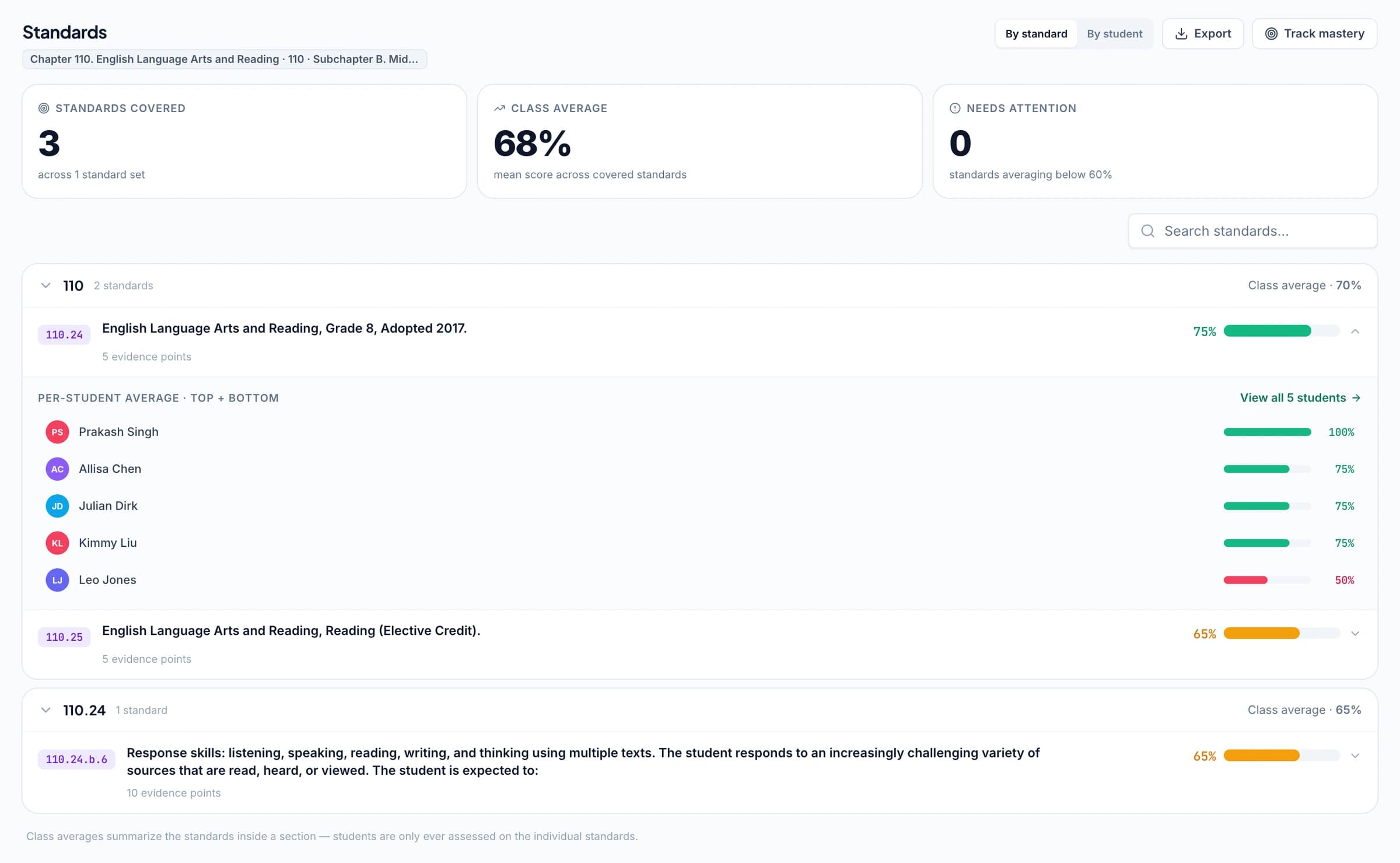
Track approved evidence against the TEKS you teach
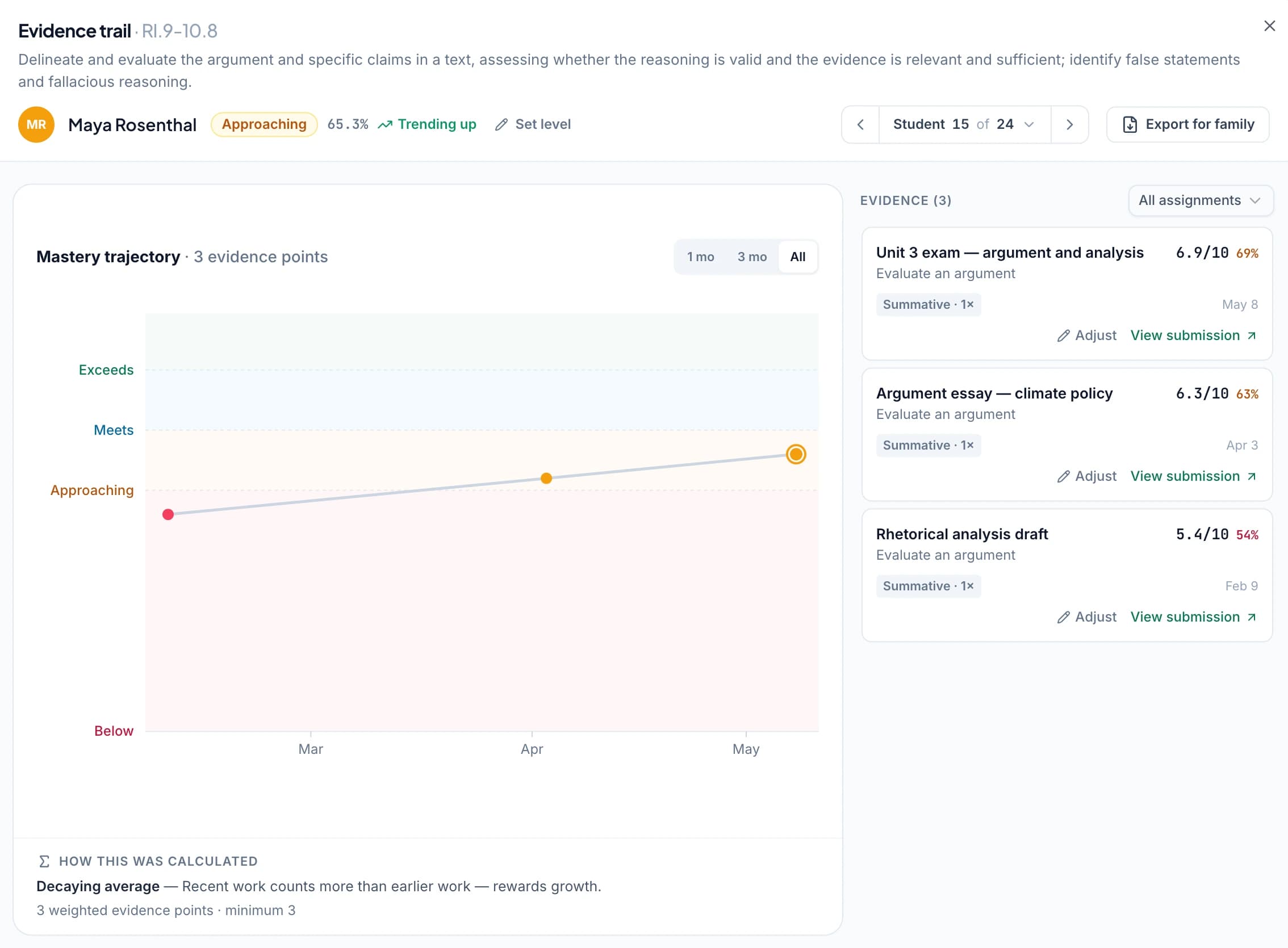
The optional standards mastery gradebook organizes aligned assessment evidence across tasks. Open the work behind a standard-level result and compare later demonstrations with earlier practice.
Choose your calculation settings if using mastery levels, or continue with assignment points and standard-level percentages. The record describes classroom work under your criteria and can support student conversations and teaching decisions throughout the course.
Questions about Texas classroom grading
Does GradingPal use my marking criteria?
Yes. Your rubric and relevant instructions guide the suggested assessment. Inspect the evidence and make any changes before approving the result.
Does a TEKS label mean an official TEA scoring guide is built in?
No. This workflow uses the teacher or department rubric you create and review. Do not infer official scoring materials from a standards tag.
Can GradingPal predict a STAAR result?
No. Classroom scores describe the submitted work under your criteria. They are not an official test score or performance-category prediction.
Can I keep paper practice tests?
Yes. Upload supported scans and inspect student matching, page order, and unclear handwriting before grading. Return printed or digital feedback as appropriate.
Can approved work contribute to TEKS mastery tracking?
Yes. Results with accepted alignment contribute to the optional standards record. Mastery levels use your selected calculation and evidence settings.
Can I use the same rubric across a teaching team?
Use agreed department criteria and shared resources where included in your plan. Teachers still inspect individual results and review the alignment for the task they use.
Explore related features
Learn more on the blog
Make the next practice set useful beyond the total score
Give students a specific correction and use their responses to plan the next explanation or practice task.