AI grading for New York classroom and Regents practice
GradingPal assesses supported writing, math, science, and practice responses against your teacher or department rubric. Return individualized feedback, connect relevant criteria to New York learning goals, and inspect approved evidence across the assignments students complete throughout the course.
50 free submissions per month, shared across assignment types.
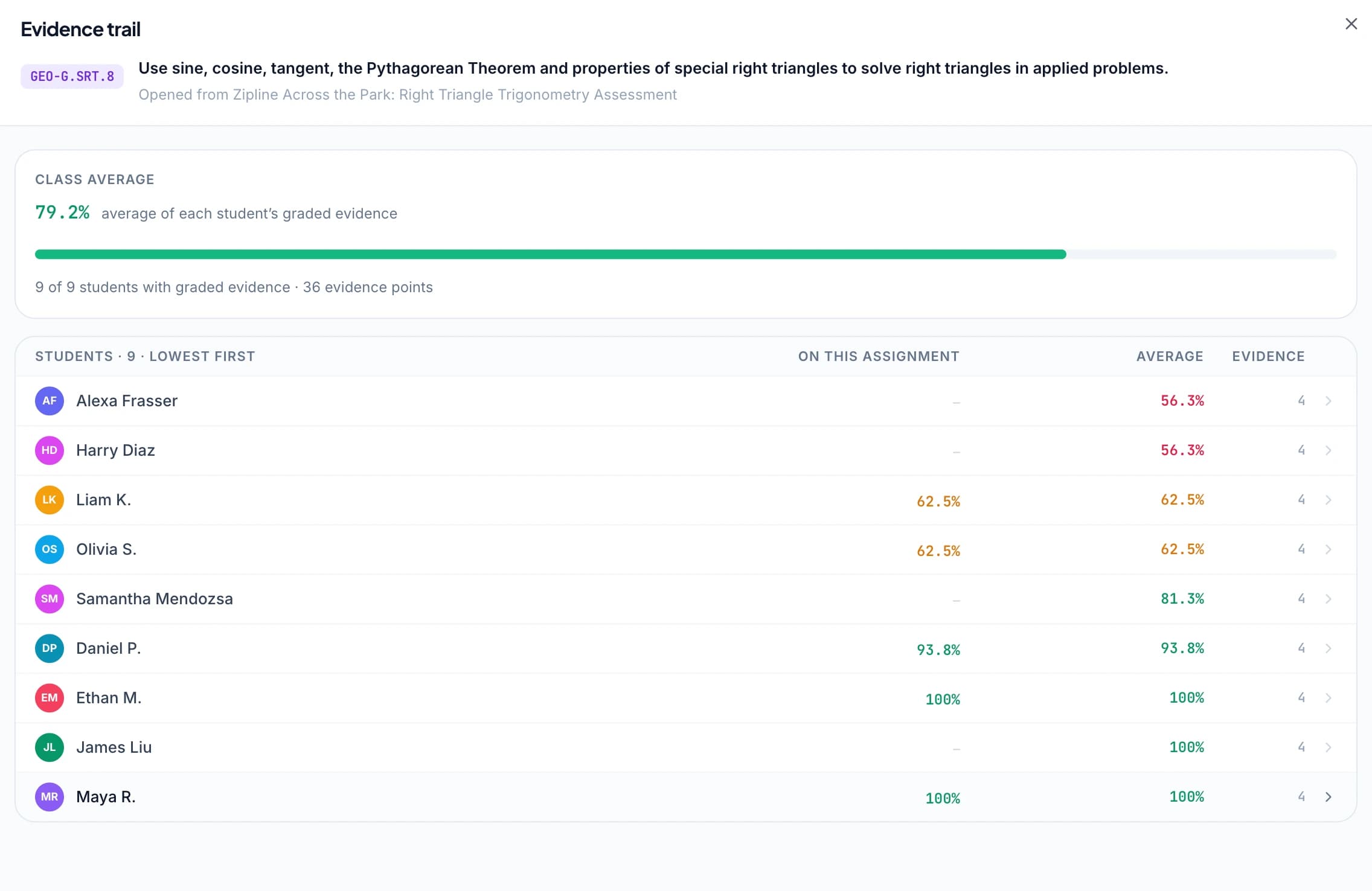
Use the assessment expectations your department teaches
Start with the rubric students know. Make the criteria for evidence, analysis, explanation, or working explicit, then let GradingPal generate scores and comments for review.
Open the student response and scoring evidence to inspect how the criteria were applied. Use shared wording in department discussions while retaining the teacher's judgment on each response. Custom instructions can add the terminology or context used in your lessons.
Assess the practice that needs detailed explanation
Different courses reveal learning through different kinds of response. GradingPal supports the relevant submitted work through its writing, question-based, math, and science workflows.
Argument and text-analysis responses
Assess source use, claims, analysis, and organization against your ELA criteria. Return a specific next step in the student's own paragraph. Essay grading.
History and document-based writing
Use department criteria for enduring-issues, civic-literacy, or other source-based practice tasks. Inspect how students connect documents and contextual knowledge to the argument.
Math constructed responses
Assess answers, working, and explanations under the rubric, including readable handwriting. Make method and reasoning credit explicit. Math grading.
Science explanations and data responses
Assess the submitted reasoning, calculations, and conclusions against the task. Select the appropriate science standards context and review scientific correctness. Science grading.
Connect the work to the correct New York standards set
Select the set relevant to your course, including NGLS for the appropriate ELA or math context and NYSSLS for the relevant science work. Keep social studies objectives in their own course context.
Review suggested tags on questions and rubric criteria before accepting the alignment. The useful connection is between a specific assessed skill and the submitted evidence, rather than treating one framework name as a label for every subject.
Make repeated practice build on the previous response
In an illustrative writing sequence, a student selects relevant evidence in an early essay but does not explain its role in the argument. GradingPal drafts feedback under the explanation criterion for the teacher to review.
Ask for a clearer link in revision, then inspect how the student uses evidence in a later task. A specific comment connects one assessment to the next opportunity to demonstrate the skill. Feedback settings let the explanation use the language taught in class.
Choose revision teaching from class patterns
Paid performance analytics surfaces recurring strengths, gaps, and question-level results across approved work. Inspect the associated students and responses before planning what to revisit.
If several students use the right term but omit the reasoning, model a stronger explanation. If only a few need that support, use a focused task with that group. These are illustrative applications of the evidence; teachers choose the response appropriate to the lesson.
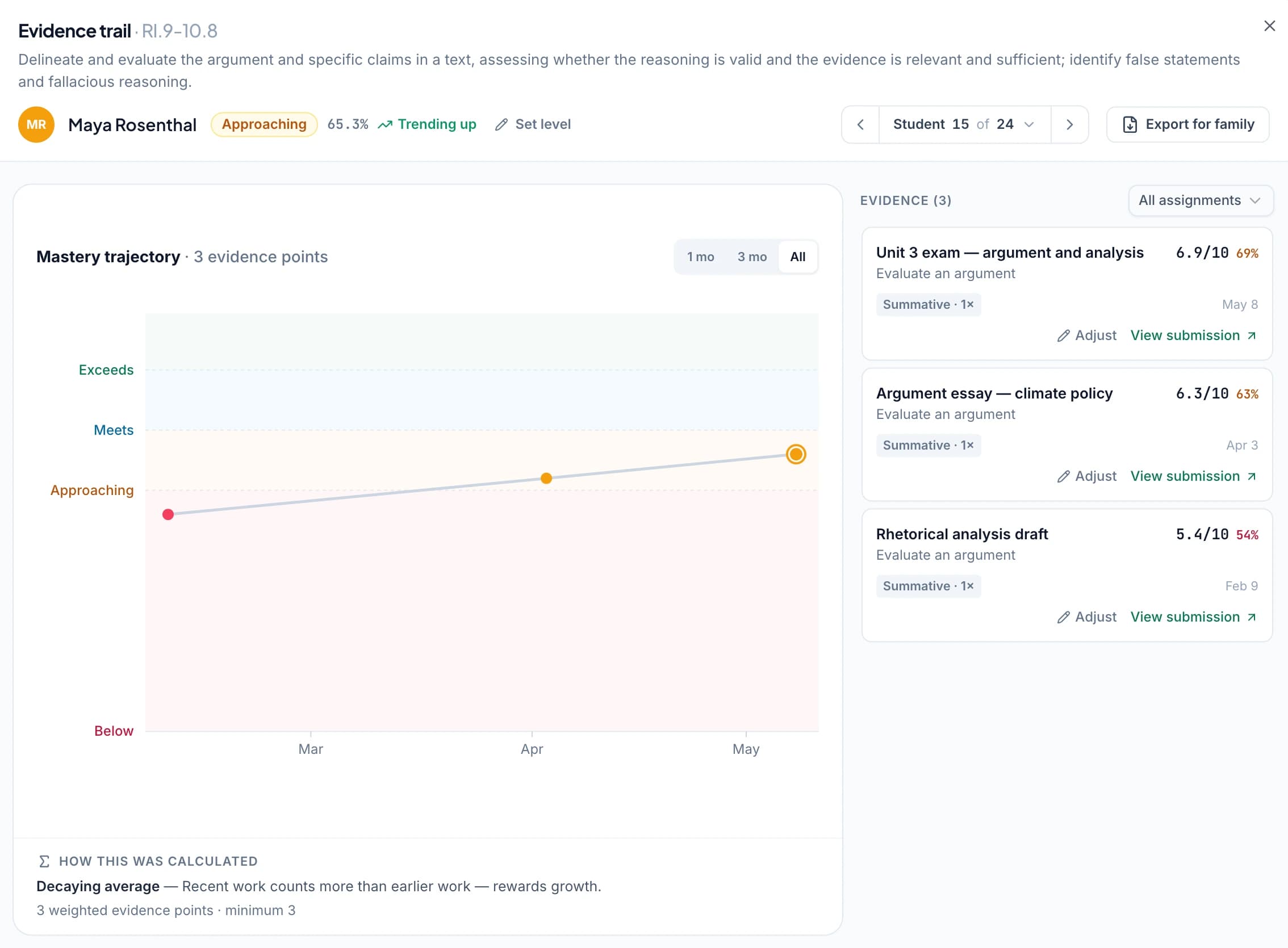
Review course progress with the work behind it
The optional standards mastery gradebook organizes approved aligned assessments over time. Return to the original work when explaining a result or discussing what further evidence would be useful.
Choose the calculation method and settings if you enable mastery levels. You can continue using assignment points and percentages. The record supports classroom teaching and progress conversations without turning practice scores into Regents results.
Evaluate the workflow with your school's requirements in view
Use a representative assignment and rubric to review the grading, feedback, and standards evidence with your teaching team. Include handwritten work if paper responses are part of the course routine.
Review security information and the existing student-data documentation, then contact the team about institution-specific requirements. Keep the classroom value and the practical adoption questions part of the same evaluation.
Questions about New York grading
Does GradingPal automatically apply the state's official scoring rubric?
This workflow uses the teacher or department rubric you provide and review. A course or standards label does not imply built-in official scoring materials.
Can it predict a Regents score?
No. Classroom practice results describe submitted work under your criteria, not an official score or grade prediction. Official examination assessment remains a separate process.
Can I assess handwritten responses?
Yes. Upload supported scans and inspect student matching, page order, and unclear writing before reviewing and approving the assessment.
Can a department use agreed criteria?
Yes. Use your department rubric and shared resources where included in the plan. Review individual results and clarify any criteria that produce different interpretations across the team.
Can I track evidence across practice assignments?
Yes. Approved results with accepted alignment contribute to the optional standards record. Inspect the underlying responses when interpreting the progress view.
Is NGLS the label for every New York subject?
Select the appropriate set for the actual course. Keep ELA, math, science, and social studies goals in their relevant framework context rather than using one label for all work.
Explore related features
- AI essay grader
- How AI grading works
- Ai grading high school
- AI worksheet grader
- Classroom analytics
- Data privacy addendum
- All GradingPal features
- GradingPal for schools
- Get in touch
- Grading controls / instructions
- Pricing
- Security
- Supported standards and states
- Standards mastery gradebook
- Standards / common core
- NGSS science grading
- Use cases
Make the next practice response easier to grade and teach from
Use your criteria, return specific feedback, and inspect what students demonstrate across the course.